17 September 2016

安田と喜如嘉

今回はアート旅でもあった。
那覇についてすぐに首里にある城間びんがた工房を訪れた。傾斜地にあり、屋根にのった黄色い看板はよく見えるのに、どうやってそこまでたどり着けばよいのか、わからずぐるぐるしてしまった。
ステンシルで作品を作ると紅型みたいと言われることもあり、紅型の技法と図案は前からとても興味があった。しかも自然モチーフの作品がたくさんある。
『琉球布紀行』(澤地久枝著)には、城間栄喜氏に師事した藤村玲子氏が、さがり花をデザイン化するために夕闇に花が咲く瞬間を見ようと何年も通ったエピソードが出ていた。
絵でも図柄でも、本物の生物を見て作者が独自に図案にしたものと、誰かが作った既成の生物のイメージをアレンジしたものとは、何かが違う気がする。だから生き物好きとしては、古典柄よりも、沖縄の風物を取り入れて作られた最近の柄のほうが好きだったりする。


The first night we stayed in Ada, a village on the east coast of Yambaru. In front of our accommodation was a river with black mangrove and kingfishes and common sandpipers were flying along. 

At Ada village, we met Ichiro Kikuta, an artist who paint birds and plants on Byobu or screens, with Japanese black ink.

When I was looking for information about the area, I happened to find his website and immediately fell in love with his works.  So I contacted him and he kindly invited us to his studio and showed us lots of his works —— nature of Yambaru in the world of monochrome.  They were so beautiful.  
He is a keen birdwatcher, too, and often does field sketches.  It was great to see files of his sketches as well.


安田の夜。うしかい座とりゅう座を背景に佇むリュウキュウアオバズク。


夜中、宿近くの木の上がバサバサと騒がしいと思ったら、オリイオオコウモリだった。電線にも、ずらりとぶらさがっている!
We watched this Ryukyu fruit bats, too, using a torch light. I had no idea about the anatomy of the bat so it was very difficult to get the sense of its pose.


This is the fruits, Common garcinia, which the bat was eating. 
オリイオオコウモリが食べていたフクギの実。マンゴスチンの仲間と出て来たけれど、ちょっと腐りかけのものは、むしろドリアンみたいな匂いがした。
あちこちの集落にフクギは植えられていた。風害や塩害に強くて耐火性もあるので屋敷林として重宝するようだ。
染色に使うのもこの木。葉や小枝でも染められるようだが、本格的に染料を取るには、樹齢200年近い木の樹皮が良いという。『琉球布紀行』によれば、城間栄喜氏が沖縄戦後の再起の一歩として首里に紅型工房を構えたときにまず行ったのが、各地から樹齢の高いえりすぐりのフクギの実を集め、木を植えることだったという。


Striated heron
ササゴイが真剣にえさ取り。でも見ていた間にくちばしを突っ込んだ2度とも失敗だった。


カワセミが何羽も飛び交っていた。


西海岸の喜如嘉にも立ち寄った。水田では、セイタカシギやタカブシギ、クサシギ、ヒバリシギ、アマサギなどに加えて、実は国内では初めてシロハラクイナを見た。ヤンバルクイナをよく観察した後に見ると、一回り小さいのがよくわかり、そして顔つきのせいか、よりマヌケそうに見える。やっぱりかわいい。

芭蕉布会館も立ち寄った。糸芭蕉から取れる繊維で織った布、芭蕉布の作品展示と作業場が見られる。織りの制限の中で描かれた図案化されたセミやトンボ模様がおもしろい。フクギで染めた黄色いショールもあった。

16 September 2016

ヤンバルクイナ

夏休み、修学旅行以来の沖縄に行って来た。
The word "Kuina" in the title of my blog means the Rails or Rallidae in Japanese.  The title can be translated as "17th street of Kuina avenue."  I love that family even though I have not seen many species.
Yambaru Kuina or Okinawa Rail is an iconic species in this family in Japan because it is endemic only to the Yambaru area on the mainland Okinawa and was discovered as recent as 1981.


Last weekend, I finally got a chance to visit Okinawa to see them.  One dream came true! 


どのくらい簡単に見られるのだろう、と思っていたけれど、時間と場所を選べばじっくり見られる鳥らしい。家族で行動を供にしている事が多いというが、隣の家族と仲が良いとは限らないようで、水浴び場を巡って、別家族を追い立てているところも見られた。


After the sun set, they came to the river to bathe.  One crouched down to soak its breast and stood up to let the waterdrops trickle down its back.  It was the same way how moorhen does.  


In the morning we saw one eating mulberries.  It looked exactly like my Little Brown eating blackberries.  


茂みの脇からひょこひょこっと顔を出し、広場や道路は全速力で駆け抜ける。なんだか広場恐怖症みたい。


The previous night our friend guide spotted us a sleeping rail. Okinawa Rail roost on  trees to keep away from snakes.
The next day, we went back to the place at the break of dawn.  We parked the car far behind and checked the tree with a scope.  

There it was, a silhouette rail walking down the tree.  Since they can not fly, they have to walk up and down the tree.
There was another one on a different branch.  The fist one waited for the other to come down lower before it jumped on the ground together.  They seemed to be a family.  


雨上がりに何羽も草地にえさ取りに出て来た。


A snail endemic to Yambaru, the Okinawa Rail's snack.

5 September 2016

谷津干潟のワイルドライフアート展

『谷津干潟のワイルドライフアート展』が昨日からはじまった。谷津干潟自然観察センター主催で、わたしを含む日本ワイルドライフアート協会の12名が参加している展示だ。


探鳥地のビジターセンターでの展覧会はやってみたいことの一つだったので、実現してうれしい。しかも渡りのシギチシーズン真っ只中!
昨日、一日当番をして色々な方とお話した。展示を見に来てくださったお客さんの中には、初めて谷津干潟に来たという方も何人かいらした。こういう企画が、自然保護区の認知度をちょっと上げられたらうれしい。


The wildlife art exhibition at a visitor centre by the Yatsuhigata mudflat started on Sunday.  I am one of the members who organised this exhibition and I am quite proud of how it turned out!  There are 43 paintings by 12 artists and all the artworks features the wildlife which can be seen at Yatsuhigata.
I don't think there were that many exhibitions that showed this many shorebirds paintings by different artists in Japan before.  


わたしは、ステンシル・消しゴム判子・アクリルによる絵、水彩画、リノリウム版画と異なる技法で描いたシギチの絵3点を出している。
I put these three paintings of Dunlins and Black-winged stilts and Grey plovers.  


搬入日も、隙を見て少しスケッチした。観察センター内から肉眼でもよく見える距離にセイタカシギがやってきた。


This Grey-tailed tattler was looking up the sky alerted by something.  I could not make out what it was looking at.  Birds have much better eyes than us.  


キョウジョシギの群れには若鳥もいた。


When the tide is high, you do not see many shorebirds but lots of Grey herons and Great Egrets.
アオサギのさかなとりも何度も見られた。そして絵本の小さい読者も展示を見に、訪ねて来てくれて、うれしかった。


Preening Black-winged Stilts.  There were several good chances of drawing them with the naked eye.  


And when I see one using a field scope, I could see its red eye very well!


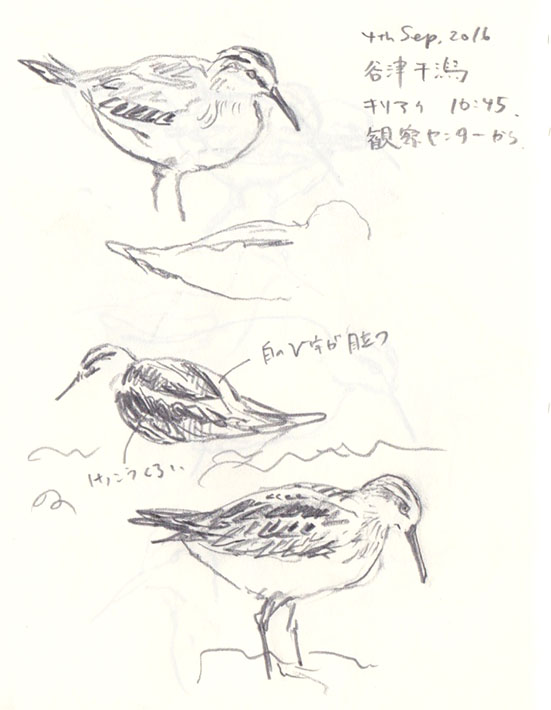
潮が満ちている間は当番も楽しいのだが、干潟が出てくると、つい鳥の状況が気になってしまう。夕方になってキリアイが観察センター前にやってきたのを、知り合いが早速教えてくれた。シギチの識別にはとても弱いので、そっかここがウズラシギと違うのか、と改めて勉強できてよかった。
A Broad-billed Sandpiper!  


帰りの電車の中で見つけた、ヨツボシノメイガがきれいだった。電車の雰囲気を出したくて、向こうの人の足も描いてみた。実際はこんなに大きくはなく、開いた長さが4センチくらいの蛾だ。

『谷津干潟のワイルドライフアート展』
展示は19日(月・祝)まで。※月曜休館(ただし19日は祝日のため開館)
谷津干潟自然観察センター内にて 9:00〜17:00(入館は16:30まで)。
入館料:センターの入館料として、高校生以上370円、65歳以上180円がかかります。

29 August 2016

第13回フィールドスケッチ会

8月28日、谷津干潟でフィールドスケッチ会を行った。
We had a field sketching day at Yatsuhigata mudflat. It is the autumn migration season and Yatsuhigata was turning into a social place for both birds and birdwatchers.  


キアシシギ。今回の絵を見返してみたら、ずいぶんたくさんこの杭を描いていた。


久しぶりに動き回る遠くのシギチを目にし、はじめ、なかなか上手く紙に姿を捉えられなかった。そんな時にとりあえず描き始めた、寝ているカワウ。おかげで手と目がスケッチモードに入れた。


キアシシギ(Grey-tailed Tattler)


Preening Black-winged Stilt.  


Around noon, the sea water gradually came up to cover the surface of the mudflat.  The Grey Plovers, Grey-tailed Tattlers and Lesser Sand Plovers all gathered at the north corner.  


◆◇◆ 谷津干潟のワイルドライフアート展 ◆◇◆
スケッチから一枚絵へ。来週から谷津干潟で日本ワイルドライフアート協会・有志による谷津干潟の生き物の絵の展示がはじまる。わたしも過去2回のフィールドスケッチ会の間に描いたスケッチをベースに描いた作品など、3点を展示する。

イギリスでは自然保護区のビジターセンターやカフェで絵の展示をしていたり、探鳥地近くにギャラリーがあったりと、鳥を見に行くついでに鳥の絵が見られる環境が整っていた。こうやってバードウォッチャーがついでに絵を見、絵を見るという目的を持って探鳥地に遊びに行く人が出てくるのだと感じた。

今回、秋の渡りの季節に、一大探鳥地で展示をやらせてもらえるということで、ちょっと張り切って企画から関わらせていただいた。12名の作家による、油彩、水彩、日本画、版画、ペン画など、様々な技法で描かれた40点ほどの作品が並ぶ予定だ。

日時:2016年9月4日(日)-19日(月・祝)  9:00〜17:00(入館は16:30まで)
 ※月曜休館(ただし19日は祝日のため開館)
場所:谷津干潟自然観察センター内 特別展示コーナー
千葉県習志野市秋津5-1-1
アクセス:JR京葉線 南船橋駅から徒歩約20分、京成本線 京成谷津駅から徒歩約30分。
入館料:センターの入館料として、高校生以上370円、65歳以上180円がかかります。
主催:谷津干潟自然観察センター
協賛:日本ワイルドライフアート協会 

24 August 2016

ワイバード通信2017年冬号

新しいワイバード通信、2017年冬号の印刷があがり、うちにも見本が届いた。表紙は出水平野のナベヅルをイメージして描いた。3色版画でリノリウム1版とモノプリント2版という制約を敢えて作ってデザインしているシリーズ。あまりにカラフルな鳥は作れないかもしれないが、制限の中で作るところに版画のおもしろさはあると思う。


New edition of the YBIRD tour agency's brochure. The cover image is White-naped Cranes at Izumi, Kyusyu.
I have to visit there again someday soon to do some proper sketching. And someday I want to invite British wildlife artists there!

11 August 2016

Doodles from Nagoya Aquarium

名古屋で一日暇な日があると連絡したら、ヤクザル調査隊の仲間が一日観光案内してくださった。お忙しく暑い時期に、本当にありがとうございました。
もう長いこと調査どころか調査隊主催の懇親会にも参加していないけれど、年に数回は調査隊仲間と顔を合わせる機会がある。同じ年に参加していなかった人とも、気付けば親しくなっていたりもする。学生時代にそんな仲間に出会う機会があったのは、本当によかった。


Trying to catch the shape during the dolphin show at Nagoya Aquarium.  It was really a good croquis practice. 


カマイルカ
こういう機会にイルカの形をとる練習しておけば、いつかイルカ船に乗ったときに、さらりと描けるようになるに違いない……。


アデリーペンギン
Even in the aquarium, I was drawn to birds.


ジェンツーペンギン


When standing on land, they are just like toy robots.  When swimming in water, they are really like sea mammals.  Only when they poke their heads above the sea surface, I thought, they might be sea birds.  


くちばしがあって羽がある生物は、少し形が取りやすい気がする。


せっかくの名古屋なので、とりあえず見ておこうとラムサール湿地の藤前干潟も立ち寄った。厳密に「藤前干潟」と呼ばれるのは藤前活動センターがあるところの干潟だとは後から知ったので、訪れたのは稲永公園の側。名古屋市野鳥観察館の望遠鏡で目の前の堤防沿いに出た干潟をのぞいただけで3羽のミサゴを発見。小耳に挟んだ話では、十数羽いることもあるとか。
望遠鏡を持っていないのが悔やまれるほど、遠くの鳥ばかりだったけれど、チュウシャクシギ、ソリハシシギ、オグロシギ、キアシシギ、ササゴイなども確認。
干潟の絵を描くというときのために、東京湾でない干潟のイメージストックがまたひとつできた。

4 August 2016

Vision for Nature

Recently, A Focus on Nature, the UK's youth nature network, launched a report called "Vision for Nature." It gathers views and thoughts from over 200 young people on how they want the natural world to be in 2050 and how we can get there.  It is nicely put together and worth reading.  You can find the whole PDF here.
"It's meant to form the start of the conversation...and we're clear that we'd like to work with Governments, businesses and NGOs to make this vision a reality" wrote the associate director of the network.
 It's really inspiring to know that there are young people thinking and acting on these matters!


2015年11月号のBIRDER誌の「英吉利流バードウォッチング」連載でも紹介したA Focus on Natureという自然保護活動家のネットワーク団体が作成した、若者200人の思いを集めた50ページ以上にもなるレポートが出された。2050年にどんな自然環境を保ちたいか、そのためには何ができるかなどをまとめたもので、これから議員や企業などにも働きかけていくという。
イギリスのヤングたちは、自然についてこんなことを考えている、というのが分かる。そしてこれをまとめられる行動力はさすがだ。

連載記事の取材で際にお世話になった方から誘われ、わたしも下のミツユビカモメの絵を描かせてもらった。


And I contributed this little illustration of Kittiwake colony.

3 August 2016

雑多な夏草

最近のもらいもの。


自分では絶対に見つけられないもの。
We call those fungi that parasitize insects, Touchu kasou, meaning a creature that lives as an insect during winter and as a plant during summer.


ハマゴウ


Monday evening meet up with friends from junior high school started at a curry restaurant and ended at a local playground.  People must have thought that we were playing the Pokémon Go but no! We were trying to catch the real monster!


まわりにたくさんの木が生えているにも関わらず、見つかった3匹のうち2匹が公園の金属製の柵で羽化をしていた。なんでこっちに登ろうと思ったのだろう。


7月末は知人の調査の見学に行って来た。身近な鳥の成鳥と若鳥の違いなどをとても詳しく教えてもらった。


6月末の森歩きから、たぶんハツの仲間。


I was looking for this bamboo fungus in the end of June and walked around the nearby green area. I have to confess that I couldn't find it myself and asked a group of friends to help me.
Very early Saturday morning, when both my mother and I were still asleep, our home phone rang.  It was my friend calling me that he found a bamboo fungus!


I do have really good friends!